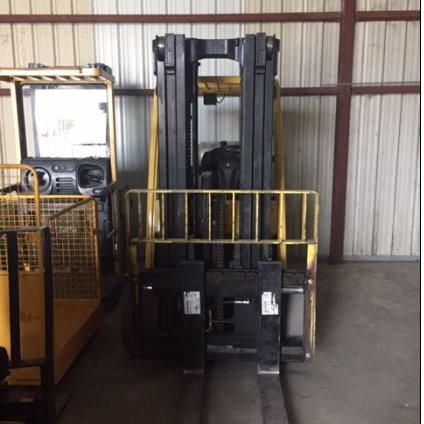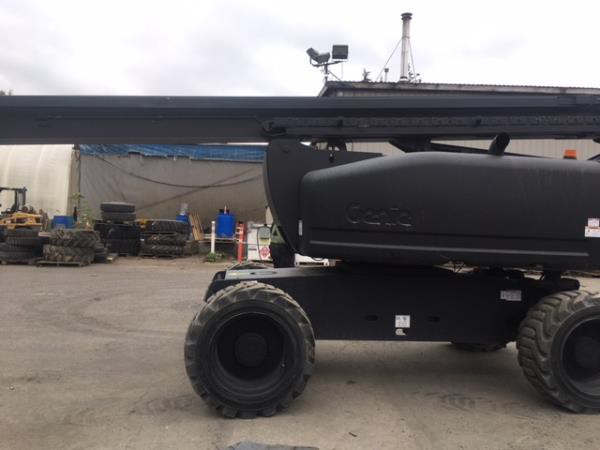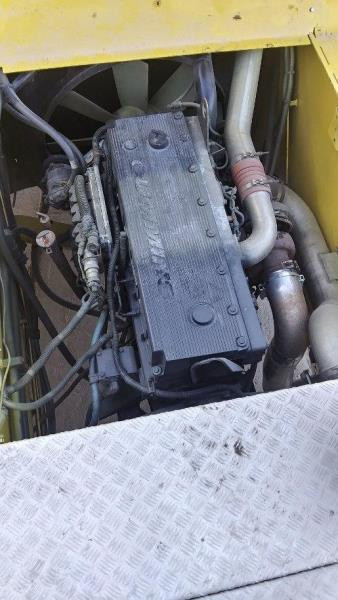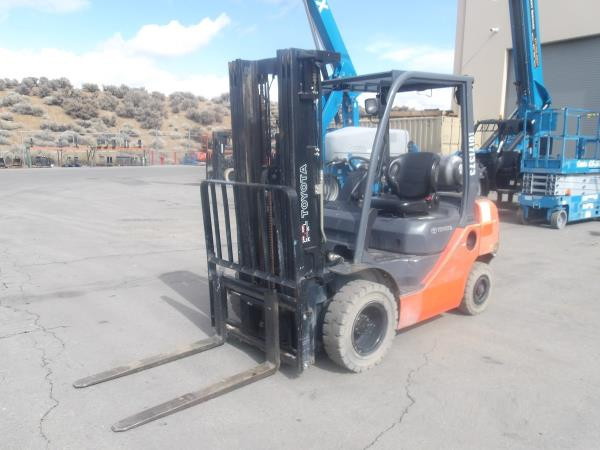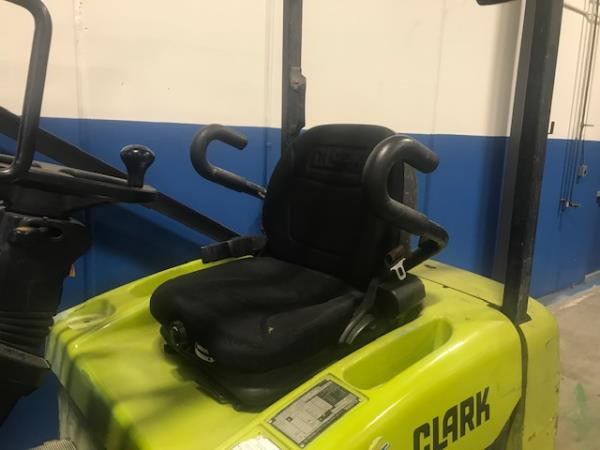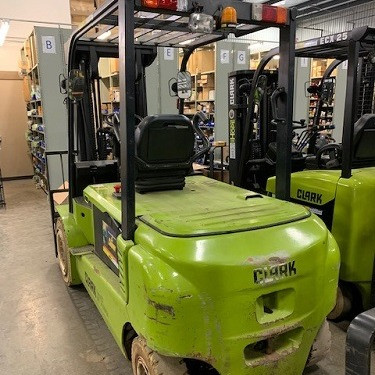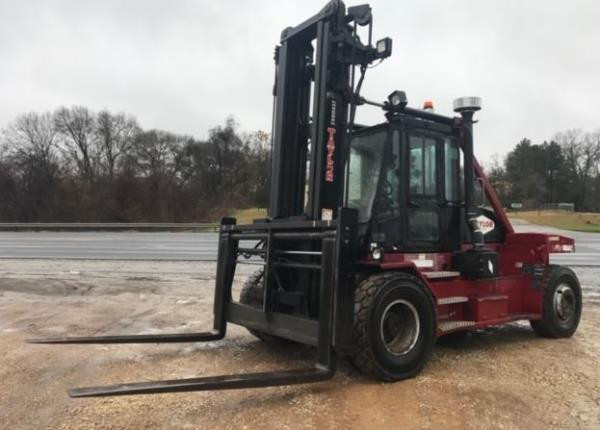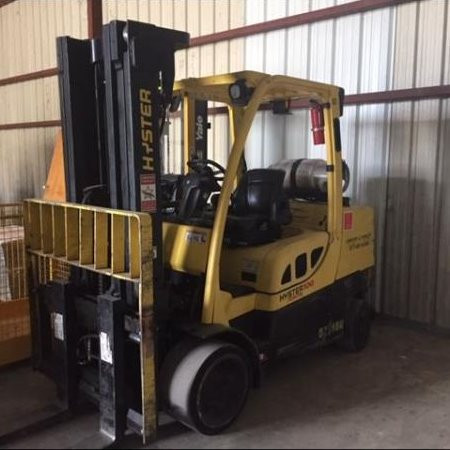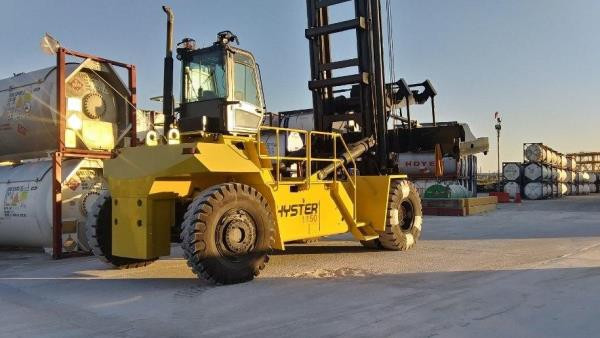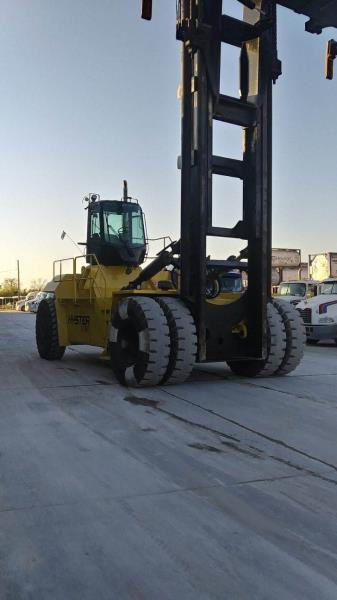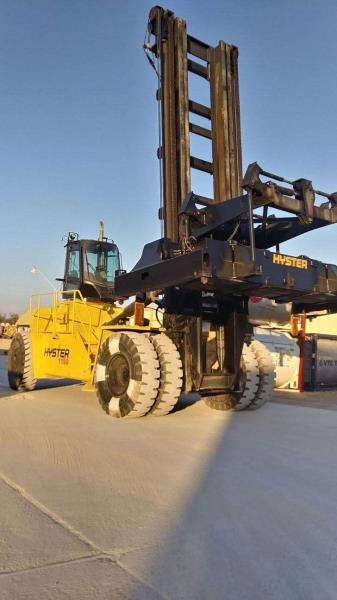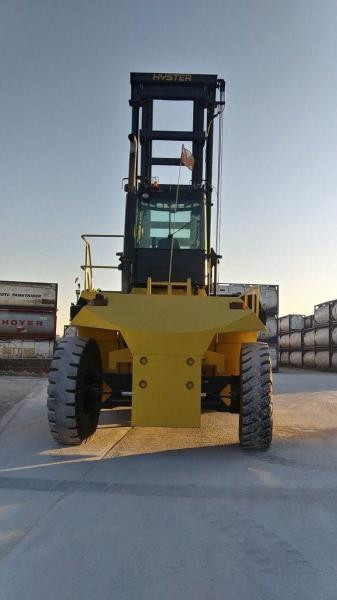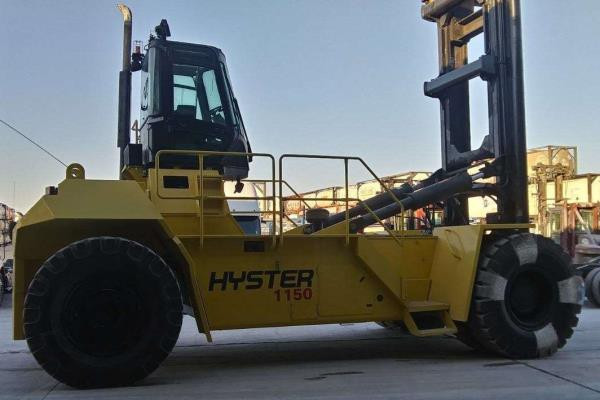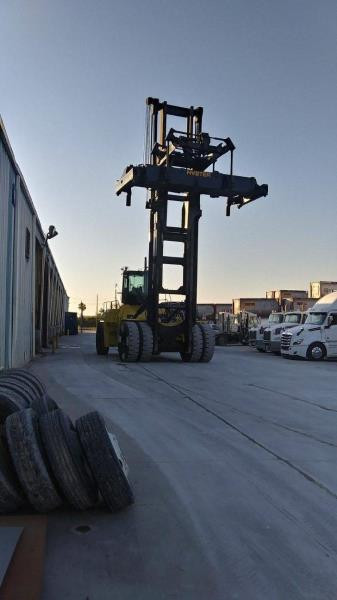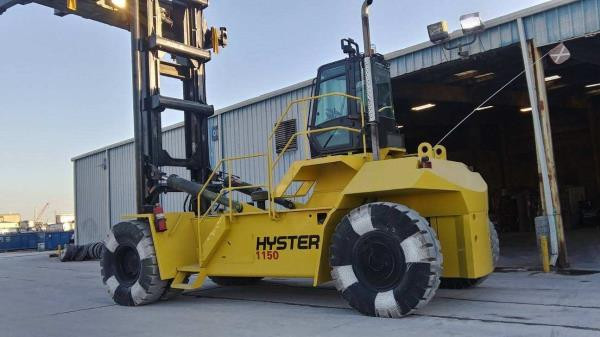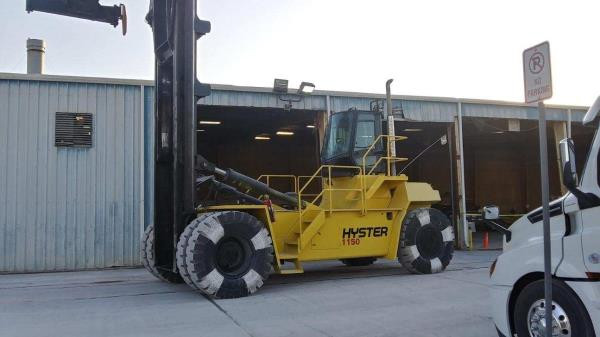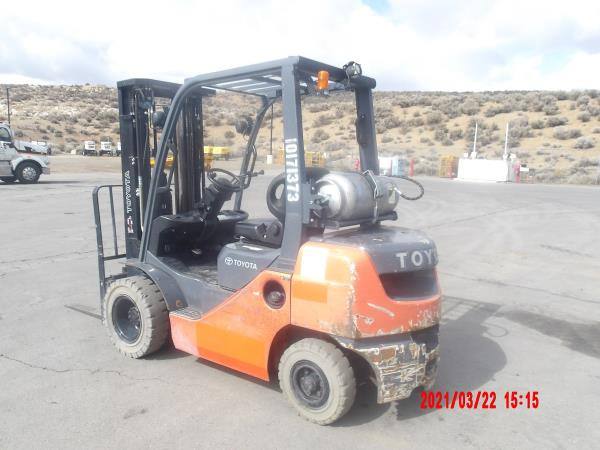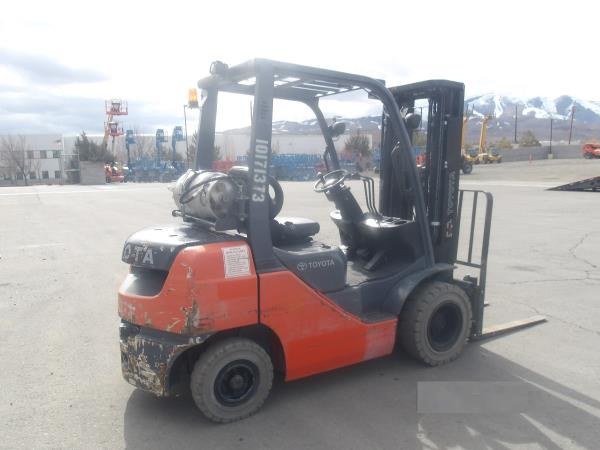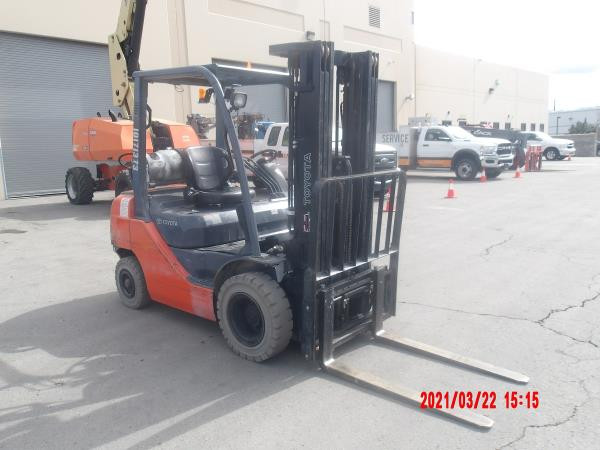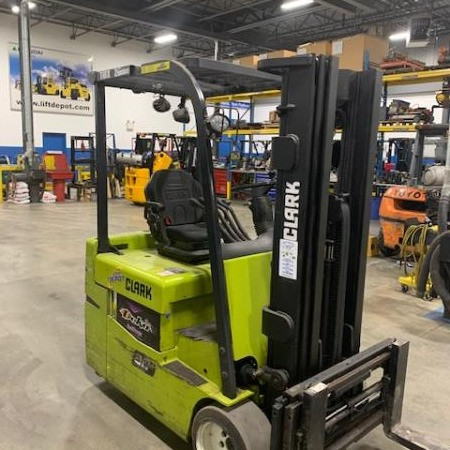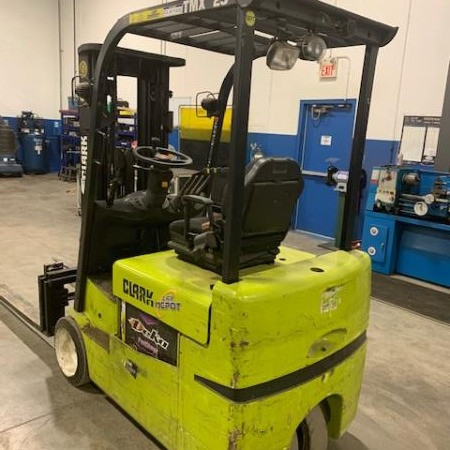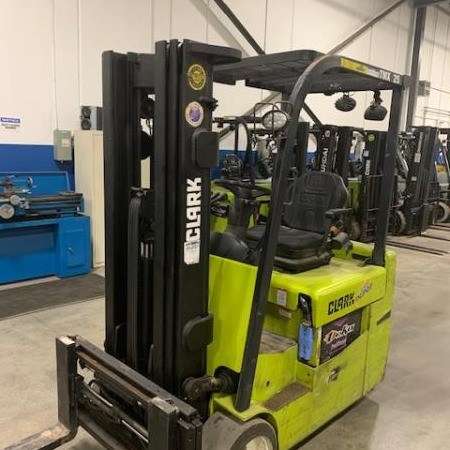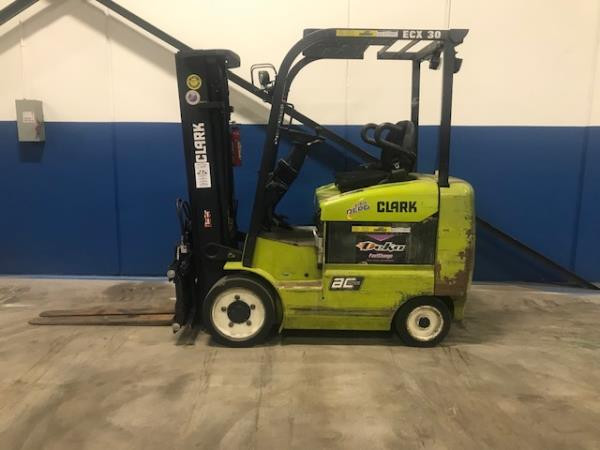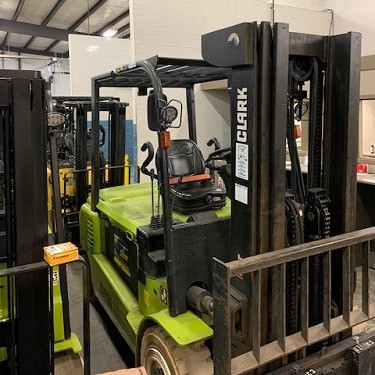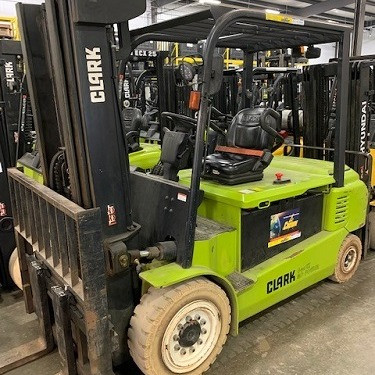


Used Forklifts Pennsylvania - Forklift operators are working in warehouses and factories to move materials from one location to another. Operators require specialized training, that is normally offered by the workplace. Potential drivers should be able to pass a drug test and a background check. Performing safety and functionality inspections every day is part of the various responsibilities of a forklift driver. The Occupational Safety and Health Administration mandates that all forklifts be inspected before use. The operator must check the forklift once more at the end of the shift. Annual safety training is really a very vital part of a forklift operator's job description. Forklift operators utilize controls on the forklift to load and unload materials and to be able to stack products efficiently and in a timely manner. As part of the various responsibilities, the forklift driver should both weigh and log the weights of the supplies they must transport. Quality control is another important part of the forklift operator's role. This includes ensuring orders are right and making sure the materials do not sustain damage during the moving process. Caring for the forklift battery helps ensure a long life span for the unit. Correct care and maintenance include inspecting the water level inside the forklift battery around every five charge cycles, filling the cell to just above the visible protector, being careful not to overflow the water, and cleaning up any spills. Once a forklift battery is charging, never disrupt the cycle. When performing works on the battery, such as inspecting the level of water, Personal Protective Equipment or PPE is essential. Both hand protection and eye protection should be worn, and an acid spill kit and a fire extinguisher should be on hand. Forklift operators must always observe safety rules. The charging area must be kept clear of open fire and ventilated. A type of equipment in the material handling business which can be utilized to lift and move loads from one place to another is called a forklift. Every forklift part has a particular function. Various components could be used to transport the load horizontally or vertically. The mast refers to all the parts that lower and lift the load. There are various types of masts for raising loads to different heights: duplex, triplex, quad and simplex. Forklifts have four different ways of being powered: gas, electric, propane and diesel. The battery is situated in the cab under the seat. The propane tank is located on the rear of the truck. The fuel tank on gas and diesel forklifts is underneath the back of the truck. Located within the center of the truck is the forklift cab. This is where the operator sits and accesses all the informational gauges and controls. The steering wheel, gas pedal, lifting controls, tilting controls and brake are all situated inside the cab. The truck frame carries all the largest parts of the forklift, including the counterweights, that are situated at the back to prevent the truck from tipping when loaded. The frame includes the overhead guard that protects the operator. The undercarriage holds the axles, wheels and driveshaft. Hyster is globally acknowledged as an industry leader in the forklift manufacturing business. However, it started as a producer of lifting machines and winches. Most of its production was concentrated in the Pacific Northwest and dealt primarily with the lumber and logging industry. A couple years after the 1st forklift trucks were invented Hyster became synonymous with quality manufacturing. Over the last eighty years Hyster has continued to get bigger and develop its product line. The growth of its products coupled with its wish to stay service oriented has allowed Hyster to develop into the global player it is at present. All Toyota machines and components manufactured within North America adhere to the International Organization for Standardization or ISO 14001 standard. The Columbus TIEM plant has been honored on many occasions for its commitment to relentless progress and its environmentally friendly systems. It is the first and only producer to offer EPA and CARB-certified Compressed Natural Gas powered lift trucks on the market. For instance, the Toyota 8-Series IC lift trucks emit 70 percent less smog forming emissions than the current federal EPA standards and have complied with California’s strict emission standards and policies. Supplying the market with heavy equipment, Doosan Heavy Construction Equipment makes articulated dump trucks, wheel loaders, log loaders, crawler excavators and a great deal of heavy equipment parts. They have risen to develop into the 5th biggest seller of construction equipment worldwide. Formed in South Korea in 1986, Doosan originally started off as a trading company under the name Park Seung Jik Store, situated in what is today Jongno 4-ga, Seoul. In 1996, the organization started to direct attention to infrastructure support and is at this moment the oldest and longest operating corporation in South Korea. After acquisitions in 2005, which includes Daewoo Heavy Industries & Machinery, now termed Doosan Infracore, Doosan has evolved to be a worldwide conglomerate, focusing on the construction sector. The business grew to become the world’s biggest small construction equipment seller by 2007, after acquiring Bobcat USA, worth 4.9 billion. Having businesses in thirty-seven nations and around thirty-eight thousand workers, Doosan immediately became the 7th largest construction machine producer. In 2018, the business proudly produced its’ 400,000th excavator.
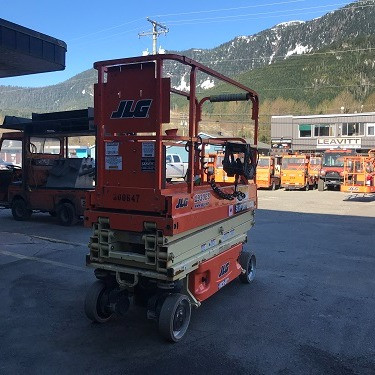
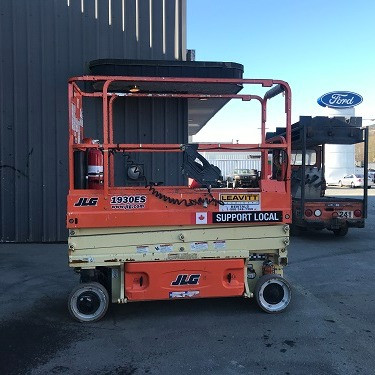
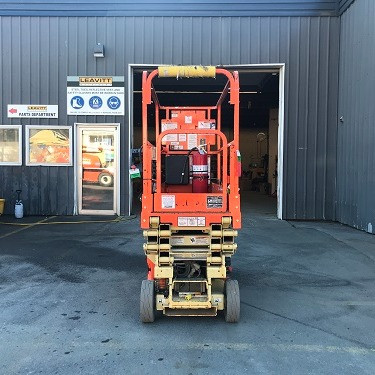
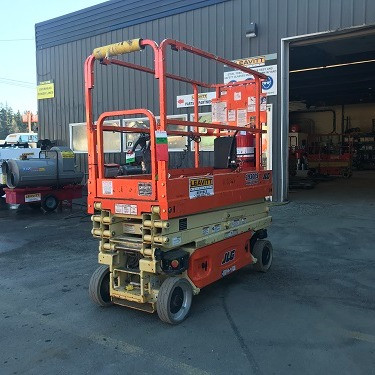
Skyjack: Skyjack Manlifts Pennsylvania - Skyjack Safety Based on Skyjack, the scissor lift is a kind of specialized industrial machine used specifically for positioning workers, their equipment and their tools. Anybody who is getting ready to use this kind of machinery has to familiarize themselves with the suggested operational and safety measures suggested by the manufacturer in order to stay safe prior to attempting to utilize this equipment. It can be devastating to the operator themselves and any bystanders causing severe injuries if the safety recommendations are not followed. Area In the best situation, scissor lifts function at optimum levels on totally level ground. The area has to be checked and cleared of any loose debris prior to driving a scissor lift over a particular terrain. In order to lessen the possibility of the scissor lift tipping over and potentially causing the driver to fall from his seat. It is recommended to avoid holes or steep grades while operating. Bystanders should also remain aware and avoid the operating scissor lift in order to ensure they do not get run over. Inspection Prior to trying to use a scissor lift, the user should thoroughly inspect all the integral components of the machine. The operator can see if all the parts are working properly before the task is initiated, a functional test is performed while the lift is retracted. It is better to complete a daily inspection on this machine before starting the shift and some places even want an inspection to take place at the end of the shift also. Various businesses have various policies in place to maintain safety. Part of the inspection has to be inspecting the tires. These parts obviously add to the movability of the scissor lift and also provide the machine with a solid foundation. A tire which is worn or faulty could blow and throw the operator from their location on top of scissor lift.
Kalmar: Kalmar Big Forklift Pennsylvania - Handling and moving cargo in ports have become more involved over the years, Transporting various kinds of cargo requiring constant pallet movement. There are so many different types of cargo which move through ports each day, thus, it takes lots of different kinds of equipment to make the daily work in ports a possibility. Cargotec offers efficient productivity and excellent maneuverability for general load handling and fantastic customer service. There is always a need for standard forklifts for special loads and general cargo. Cargotec offers different types of forklift trucks for every kind of use, capable of handling small and large loads, ranging from 5 tons to 52 tons. When it comes to heavy material handling, Cargotec offers the correct ability and know-how to meet the different requirements of their customers. Cargotec's Kalmar product range is common within terminals and ports all over the world. Their Light and Medium forklift trucks are ideal for superior handling because they are easy to operate, simple to maneuver, versatile and can be adapted in order to meet your needs. Kalmar provides a complete array of services from maintenance and repair to training. Their machinery provides extended life cycles and enhances the overall efficiency of their customers' cargo business. Furthermore, for numerous years, the company has developed numerous solutions for cargo terminals that make handling more sustainable overall and more productive and more cost efficient. Flexibility and Strength For small and medium sized container operations, reach stackers are a great option. They are designed to handle trailers and containers. Moreover, these forklifts' strength and flexibility provides efficient handling solutions in industrial environments. The family of Kalmar reach stacker units consists of a huge range of machines which are guaranteed to meet the diverse needs of clients. Like for example, there are purpose built standard machines and then the top of the range equipment counterparts. The goal of the company is to always provide machinery which provide the greatest performance at the lowest possible operational cost throughout the lifetime of the machine.
Manitou: Manitou Propane Forklift Pennsylvania - Lift trucks are big pieces of industrial machines that are frequently utilized in distribution centers and warehouses to move and maneuver heavy cargo. The lift truck places its heavy load, that is usually moved on top of a pallet, though a range of platforms could be utilized. These loads are scooped up onto the forklift's forks, that extend from the front of the machinery. When the cargo is positioned safely on the forks, the operator can drive the machine and transport the supplies to a certain area. The forklift is used most often to transport cargo from one area to another in the particular job site. What's more, they could be utilized to unload shipments from trucks, trains and shipping containers, and are used a lot on dockyards all around the globe. Ever since its invention, lift trucks have become one of the main pieces of industrial equipment for a range of industries and numerous businesses. There are a lot of businesses throughout the world that can not function or productively operate without using a forklift every day. The choice for businesses is to buy a new or second-hand lift truck or to lease one. If the company is just starting up, often times the option to rent is the best until they can save up enough money make such an essential investment. Moreover, renting various units will help them determine which one is more suitable for their specific applications so it can be extremely beneficial to lease first. Forklift Components The lift truck is made up of many different parts such as the carriage and the forks. The forks attach to the front of the truck frame, that is the main structure of the lift truck, from which all other components are attached to. The cab is the part where the machine's controls are located and the operator sits. Usually, the forklift's power source is either a combustion type of engine or battery operated. Extra attachments are capable of being fitted onto the front of the machinery so as to accommodate a wide variety of loads.
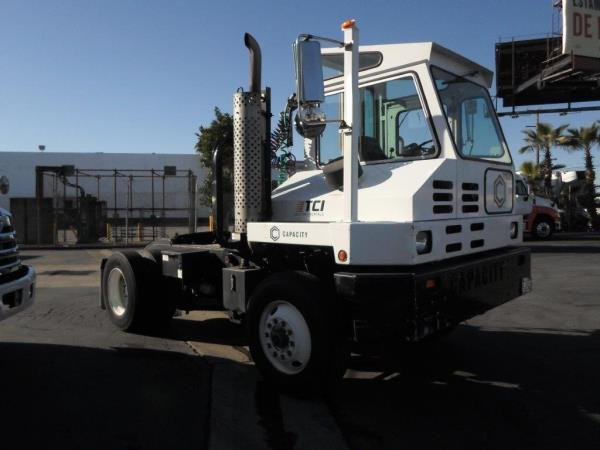
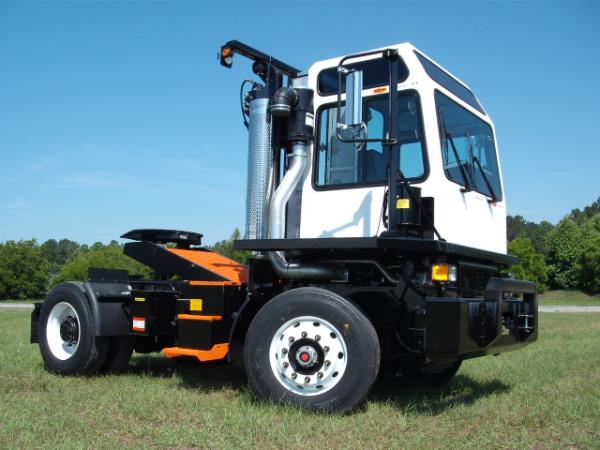
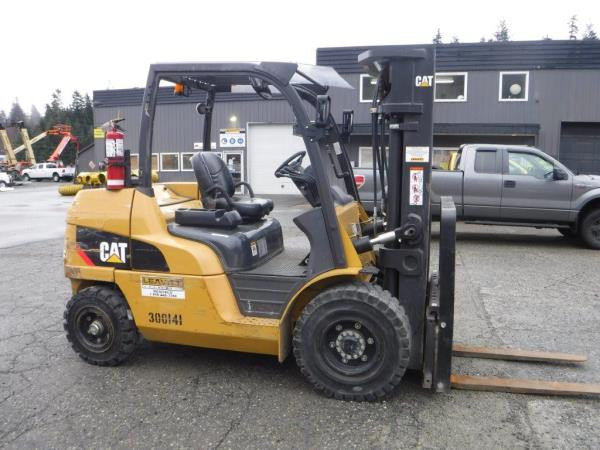
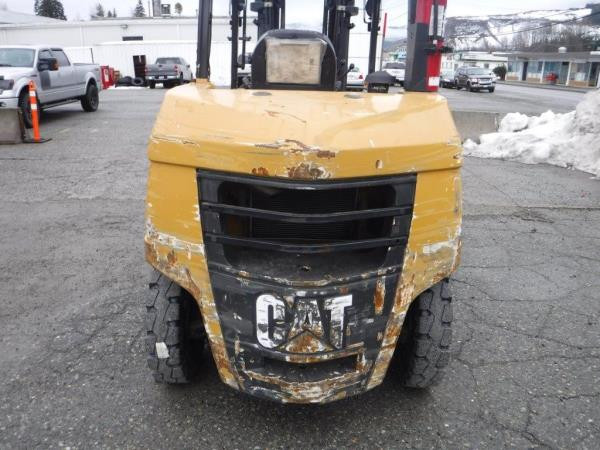
CAT: CAT Empty Container Handlers Pennsylvania - Lester M. Sears was the man who thought it might be good idea to adapt the farm tractor for use by industry more than 80 years ago. He created the "Model L," and though it may seem quite outdated now, it was packed with new ideas. The equipment changed and transformed the materials handling industry. Lester's first truck offered innovations that have become standard nowadays in the lift truck business. Several of these important features include: wheel drive, rear-wheel steering, equal reverse and high-speed forward gears, and hydraulic tilting and lifting. Lester started the "Towmotor" and after that started CAT Forklifts, after being acquired by Caterpillar in 1965. With the same dedication to sensible solutions, dedication to new ideas and exceptional reliability, CAT enjoys thinking that they are Lester's direct descendants. The Model L was very effective and durable that the model worked hard for over 30 years prior to finally retiring. Caterpillar formed a joint venture during 1992 with Mitsubishi Heavy Industries or MHI Ltd. They brought together financial and marketing strengths and technological strengths in the manufacturing of material handling machines. The company has had their headquarters within Almere, the Netherlands ever since that time. Presently, CAT Lift Trucks are among the best-built within the business. These machinery are available in diesel, LPG, electric counter balanced models and gasoline engines. The company makes a complete line of warehouse machines as well. The local CAT dealers are among the best in the business and offer over 80 years of pertinent experience. The RTCH is a specifically engineered rough terrain vehicle that is able to operate in up to 5 feet of sea water and utilizes 4-wheel drive. This model could function on soft soil locations like unprepared beaches. The RTCH is able to handle the 8 foot wide and 20 to 40 foot long containers.
Gradall: Gradall Telehandlers Pennsylvania - Gradall began making its famous excavator during the 1940's, during a time in which World War II had caused a scarcity of workers. This decrease in the labor force brought a huge need for the delicate work of finishing and grading highway projects. Ferwerda-Werba-Ferwerda was a Cleveland, Ohio based construction business that faced this particular problem first hand. Ray and Koop Ferwerda were brothers who had relocated from the Netherlands. They were partners in the company which had become among the leading highway contractors within Ohio. The Ferwerdas' started to make an equipment that will save their company and their livelihoods by making a unit that would do what had previously been physical slope work. This creation was to offset the gap left in the worksite when so many men had joined the army. The first apparatus these brothers created had 2 beams set on a rotating platform and was connected directly onto the top of a truck. They utilized a telescopic cylinder to be able to move the beams out and in. This enabled the fixed blade at the end of the beams to push or pull dirt. After a short time, the Ferwerda brothers improved on their initial design. They made a triangular boom to create more power. After that, they added a tilt cylinder which allowed the boom to turn forty-five degrees in either direction. This new unit can be outfitted with either a bucket or a blade and the attachment movement was made possible by placing a cylinder at the rear of the boom. This design powered a long push rod and allowed much work to be finished. Not a long time after, many digging buckets were introduced on the market. These buckets came in 15 inch, 24 inch, 36 inch and 60 inch sizes. There was also a 47 inch heavy-duty pavement removal bucket which was available as well.
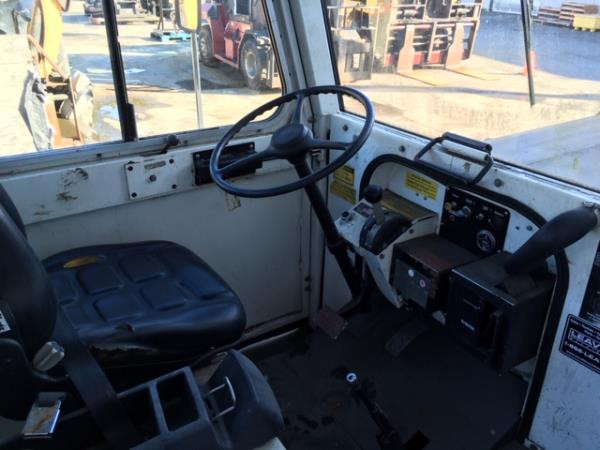
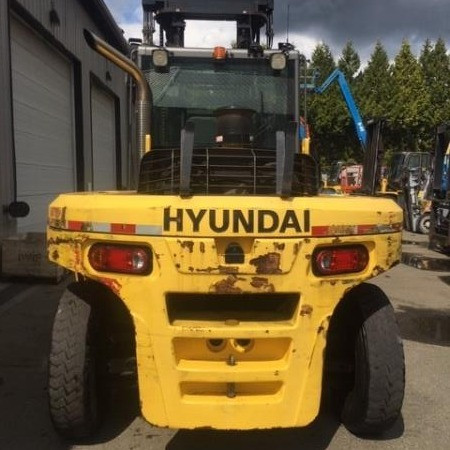
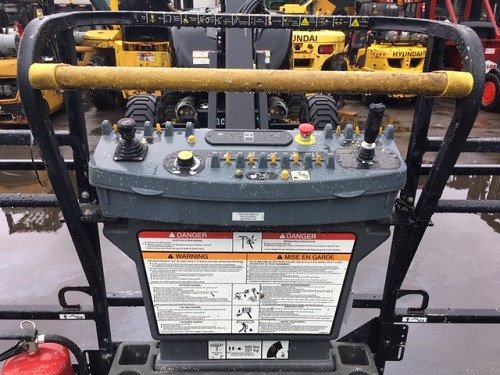
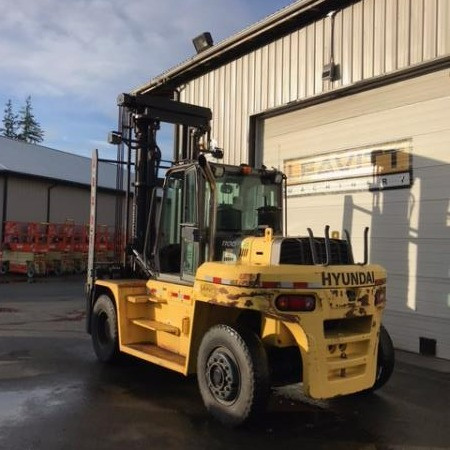
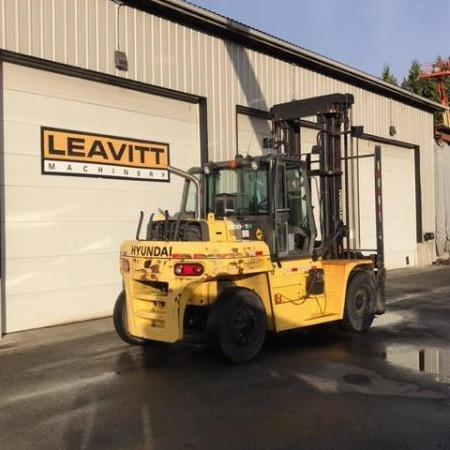
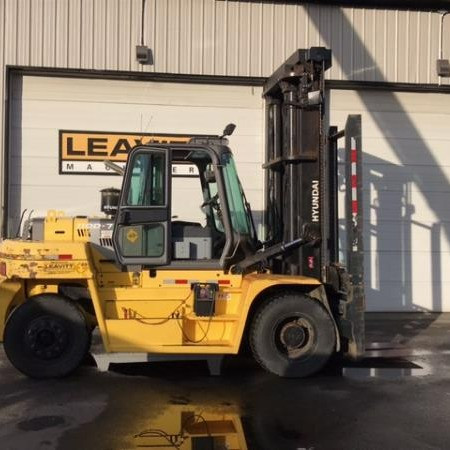
Hyundai: Hyundai Outdoor Forklifts Pennsylvania - How to Use a Forklift Important machinery used to transport and raise various kinds of supplies and bulky loads are forklifts. This material handling machine is utilized every day in our society. Forklifts are found all around from a building supply business, inside warehouses, in storage units and department stores and at airports. When operating a forklift, it is really essential to be completely aware of your surroundings in order to be safe. The first step is to power up the forklift by turning the key. Become familiar with the levers found to the right of the steering wheel. These levers are what you will be utilizing to transport an object from one place to another and also to maneuver the object to where it needs to be placed. Secondly, move the forks down and up utilizing the first lever. Pull the lever towards you to be able to move the fork up. In order to move the fork down, push the lever away from your body. Unless you are unloading or loading an item, the forks must ideally be kept near the ground. Next, practice utilizing the other two levers before picking up a load. The second lever is responsible for tilting the forks forwards and backwards. In order to tilt the forks forwards, push the lever away from your body. In order to tilt the forks back, pull the levers towards your body. These forks are capable of tilting between 15 and 30 degrees. The next thing to get used of is using the 3rd lever to control the forks movement from the right to left. From side to side, they could move between 6 and 12 inches. The levers move towards where you want the forks positioned. When you are certain that you already know what you are supposed to be do, approach the load you want to pick up carefully. To be able to lower the forks, push the first lever away from you. Drive forward carefully until the forks slide beneath the load. Carefully lift the load by pulling the lever towards you. If the load feels top heavy, be sure to slightly tilt the forks backwards. When driving around corners go slow and get into the habit of honking the horn on the steering wheel in order to alert others of the approaching equipment. Slowly approach the area where you will be unloading. Utilize the levers to maneuver the load to your final destination. When you know how to stop a car then you know how to stop a forklift. Slowly step on the brake. It is situated on the left of the accelerator.
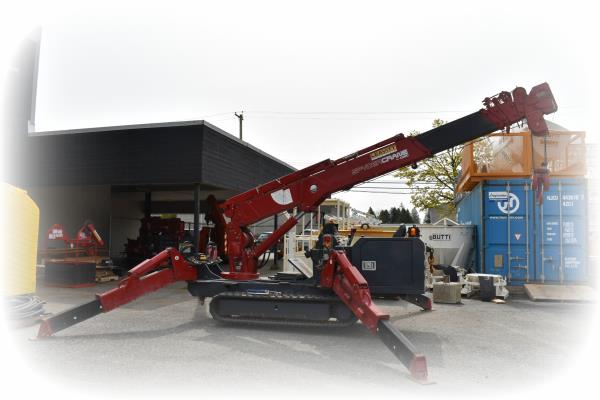
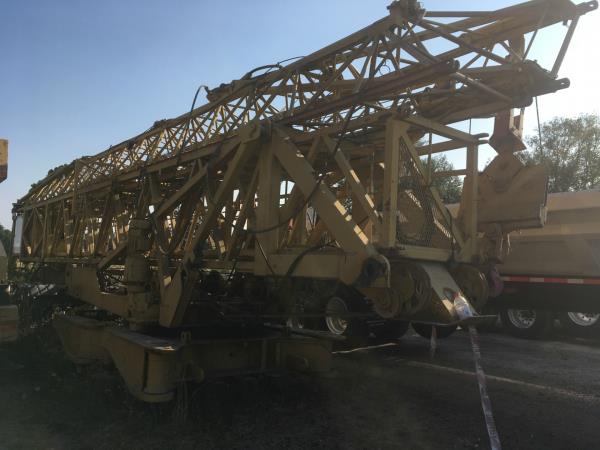
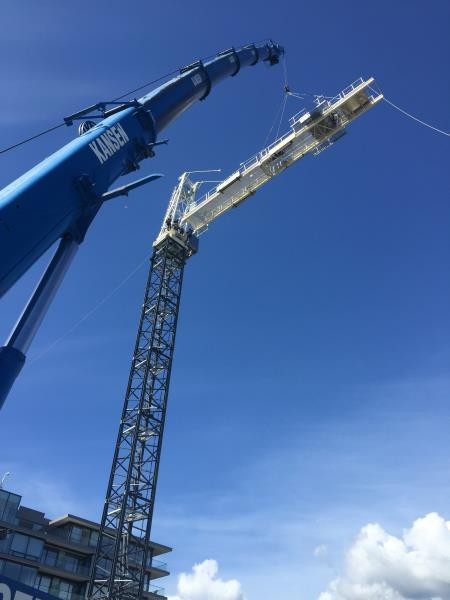
Pecco: Pecco Construction Cranes Pennsylvania - Kinds of Hydraulic Cranes Among the most popular cranes in the construction industry is hydraulic cranes. They are utilized to make everything from buildings and skyscrapers to freeway overpasses and roadways. There is a huge range of crane models, sizes and styles available on the market. There are lots of different types in order to serve a variety of different reasons in the industry. Choosing the best kind of crane is vital for making certain that the material can be moved efficiently and safely to the place it has to get to in order for the construction process to commence. Truck Cranes Typically, truck cranes have 2 different cabs. One cab is for controlling the crane and the other is for driving the truck when the unit is in transport mode. These cranes are extremely useful for building locations where a crane is needed in numerous different places for the duration of the build. This is because of the fact that the crane could be driven easily from one location to another. In addition, the cranes are able to be transported to different construction locations on the road since they could drive themselves and this eliminates the need for extra transport vehicles. Being able to travel on their own greatly lessens transport expenses at the end of the day. One drawback of a truck crane is that it is not stable enough sitting on tires alone in order to be able to lift the major loads that a hydraulic crane can handle. Therefore, to be able to fix this issue, outriggers can be extended from the deck. The outriggers utilize hydraulic pressure in order to lift the truck slightly off of the ground, making it balanced and stable. Crawler-Mounted Cranes The crawler crane is unique in that it has big tracks on the base of the crane. These huge tracks are very similar to bulldozers and backhoes. The tracks enable the crane to successfully move around a construction site.
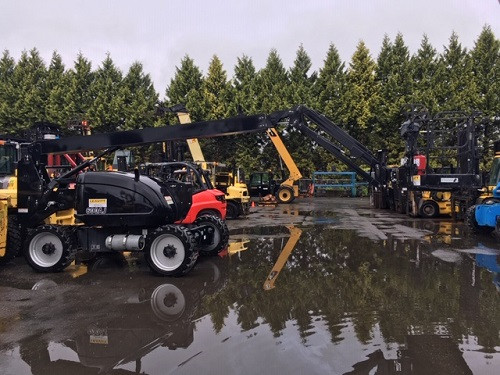
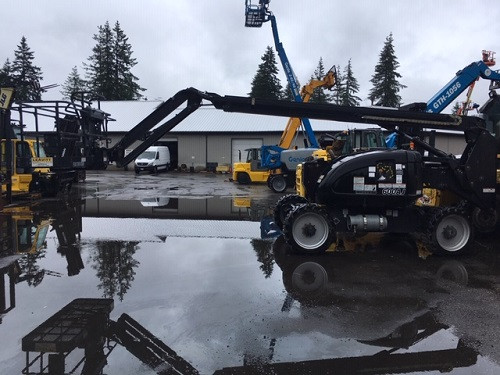
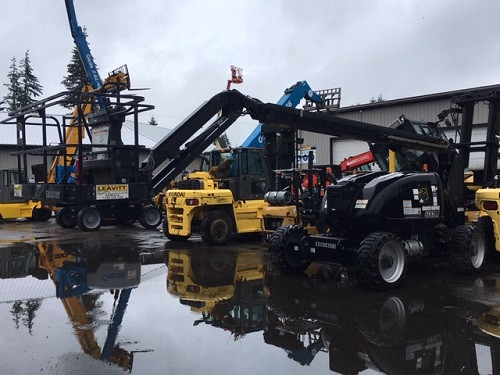
JCB: JCB Zoom Boom Pennsylvania - Raw Materials The telescoping boom rough terrain forklift's body, cab, boom and frame are normally made by a forklift manufacturer. Steel is the most common materials used to make these since they have tremendous strength. At times aluminum or steel forgings are used as well. It is common for non-metallic materials such as nylon plastic blocks to be used as guides in the boom assembly. The other components are usually purchased as finished products and the forklift manufacturer installs them. Pre-assembled purchased products can consist of several of the following: transmission, seat, axles, engine, tires, wheels and hoses, lights, back-up alarms, hydraulic cylinders and gauges. Normally, certain materials like for example the fuel and lubricants and hydraulic fluids are purchased in bulk. These liquids are added as needed when the equipment is assembled and has passed the rigorous testing sessions. Design The long and narrow design of the telescoping boom rough terrain forklift is most common, with a set of wheels at the front of the unit and another set located towards the rear of the machine. The model's boom is mounted at the forklift's back off of a pivot feature that is elevated several feet above the level of the frame. Generally, the cab is mounted on the left-hand side of the frame structure. Typically, the bottom half of the cab is low and located between the tires. The hydraulic fuel tank and the fuel tank are mounted on the right-hand side, opposite the cab. Along the vehicle's center-line, the transmission and the engine are mounted inside the frame. Beyond this basic configuration, different manufacturers have contributed to their own unique design. On the market now, there are many different options offered. Some units of forklifts make use of a single hydraulic cylinder in order to elevate the boom, and other units use 2 cylinders. Several models make use of a side-to-side hydraulic frame leveling capability. This particular feature allows the frame to tilt up to 10 degrees relative to the axles in order to allow the machinery to compensate for extreme axle articulation. This is utilized for example, when the tires on one side of the forklift are located down in a rut and the tires on the other side of the equipment are up, located on a mound of dirt. Another common design feature includes fork attachments which are capable of swinging up to 45 degrees both right and left, in order to enable accurate load placement.
Terex: Terex Construction Cranes Pennsylvania - City Cranes "City Crane" is a term utilized to define small 2-axle mobile cranes that could operate in tight spaces where the standard crane cannot access. These city cranes are great alternatives for use through gated places or in buildings. City cranes were initially developed in the 1990s as a response to the increasing urban density within Japan. There are continually new construction projects cramming their ways into the cities in Japan, making it vital for a crane to have the ability to navigate the nooks and crannies of Japanese streets. Basically, city cranes are small rough terrain cranes which are built to be road legal. These cranes are characterized by having a 2-axle design with independent steering on each axle, a single cab, a short chassis and a slanted retractable boom. The slanted retractable boom design takes up much less space than a comparable horizontal boom would. Combined with the short chassis and the independent steering, the city crane is capable of turning in tight spots that will be otherwise unaccessible by other types of cranes. Conventional Truck Crane Conventional truck cranes are mobile cranes with lattice booms. This boom is a lot lighter boom than is found with a hydraulic truck crane boom. The multiple sections on a lattice boom are able to be added so that the crane can reach up and over an obstacle. Conventional truck cranes do not lower and raise their loads with any hydraulic power and require separate power in order to move up and down. The very first ever Speedcrane was built by Manitowoc. It was a successful device even if further adjustments had to be added. Manitowoc hired Roy Moore as a crane designer to help streamline the design. He knew the industry was moving towards IC engines from original steam powered means and designed his crane to change with the times. The Speedcrane was redesigned for a gasoline engine.
Crown: Crown Reach Forklifts Pennsylvania - Lift trucks were initially introduced in the beginning of the 20th Century. They have grown exponentially ever since the very first models. Their initial purpose was to transport materials in an efficient way. This is still the main objective. There are an array of different types of lift trucks utilized in the material handling industry. Motorized Pallet Truck Rider Type Ride-on lift trucks are motorized versions of pallet jacks. These machinery are normally utilized to move pallet trucks over extreme distances, sometimes between storage areas or different departments. There is another type known as the walkie version. This model lacks the operator platform and the higher speeds. Low cost and hi maneuverability make these vehicles a better option for operations where frequent load movement is required. Several of the common options include double pallet length forks that enable you to move 2 pallets in one trip. Electric Counterbalanced Lift Truck The Electric Counterbalanced Lift Truck is used to lift and move items and materials, and used to move pallet loads and load trailers all over a facility. This kind has a wide variety of attachments available and should have a wide aisle for turning. Internal Combustion Counterbalanced Lift Truck IC counterbalance lift trucks work somewhat similarly to the electric lift truck. Propane models are able to be used outdoors or indoors as long as there is ample ventilation. Order Selector There are man-up types of vehicles which are specially made for hand loading less than pallet load amounts into and out of selective rack. The VNA or also referred to as very narrow aisle vehicles works in aisles less than six feet wide. These Order Selectors are also known as Order Pickers. Reach Truck Narrow aisle trucks which are 8 to 11 feet are made particularly for racked pallet storage. Double-deep versions load pallets 2-deep in special double-deep racking systems. These reach trucks are really effective and can make racked pallet storage a more streamlined process.
Nissan: Nissan Counterbalance Forklifts Pennsylvania - The counterbalanced forklift is a lift truck which utilizes a counter balance which is connected to the back end of the equipment. This counterbalance effectively balances loads that are positioned on the blades at the front end of the machinery. This particular design is engineered to stabilize typical lift trucks. As far as electric counterbalance lift trucks are concerned, the counterweight is formed by the battery itself. Counterbalance lift trucks can often be found in every manufacturer's product range. They are typically manufactured in a range of configurations and sizes, utilizing a variety of fuel sources. These lift trucks can be outfitted. They could operate in various applications. These forklifts are equipped with different kinds of accessories. Common attachments and options comprise: hydraulic clamps, side shifts, fork shifts and slip sheet attachments just to name a few. The counterbalance forklift has in fact revolutionized the entire business of material handling. These machinery are vital to the shipping and receiving centers all over the globe as they are utilized for loading, stacking, unloading and horizontal transport functions. The standard warehouse lift trucks are normally used for lift heights under 6 meters or 20 feet. There have been some units recently developed that are capable of lifting to heights 9.5 meters or 31 feet. The smaller 1-1.8 ton or 4000 pound forklifts are the main workhorses in most warehouses. These are the most popular units which the majority of small businesses will have. The average warehouse counterbalance forklift is a wide-aisle truck which requires approximately 11 feet or 3 meters to turn in. Counterbalance forklifts are not necessarily limited to the warehouse. They are often used for heavy use and container carrying together with pretty much every application in between. Counterbalance forklifts are the most versatile and widely utilized of all materials handling machinery. Due to their durability and versatility, counterbalance lift trucks are commonplace in a large array of working environments, including production, retail and warehousing. Several of the industrial use include: timber, automotive, food and chemical businesses.
Daewoo: Daewoo Counterbalance Forklifts Pennsylvania - Using a Regular Counterbalance forklift 1 Before operating the machine, carry out a pre-shift check. OSHA guidelines do state that pre-shift checklists need to be performed each day or every shift. Each and every different equipment and its attachments has its own checklist listing steering, brakes, emergency brakes, lights, horn, controls and safety features. 2 When starting up the machinery and check the controls, it is vital to make certain that the seatbelt is fixed firmly and the seat has been adjusted for your maximum comfort. Look beneath the equipment after you move it for any signs of leaks. The operation of every kind of lift truck is different. 3 The basic operation of a vehicle is basically as opposed to a standard motor vehicle. The forklift has a rear end swing of the forklift occurs since the truck steers using its rear wheels. Disregarding this detail is a major cause of injuries and accidents to employees. The almost 90-degree turn from the front wheels should be performed with great caution. These top-heavy equipment have a high center of gravity even without a load. When lifting or transporting a load this top-heaviness is exacerbated. 4 When traveling, keep the forks close to the floor and use caution when approaching loads. Make certain that the forks line up with the pallet. Lift the load only as high as is needed, tilting it back to help stabilize the equipment. Only drive backwards if the load is very bulky that it interferes with the vision of the driver. 5 Prior to unloading and loading, check the wheels on trucks/trailers. When lifting a load, it is not advised to travel on inclines. The machine is prone to tip-overs on an incline. When driving on an incline is unavoidable, always drive up the incline and back down. The load should be kept on the uphill side of the truck. 6 The operator must be definitely in control all the time. The main reason for operator injuries is tip-over. The operator must never try to jump out of the truck in case of a tip-over. The safest way is to lean away from the direction of fall while gripping the steering wheel and bracing your feet.
Doosan: Doosan Large Capacity Forklifts Pennsylvania - In today's construction and manufacturing industries, the lift truck is a crucial tool. The businesses which use forklifts will know their significance, their functional needs, and the safety issues involved in lift truck operation. Forklifts are a good investment which would increase workplace productivity and efficiency. Significance The lift truck offers an efficient and effective way to transport goods and products. These modern equipment move a large range of heavy goods in all types of settings. Forklifts are used to move bulky and heavy objects which would otherwise need to be moved manually in smaller units. Function The racks of the forklift could often reach as high as 9 to 12 meters allowing for the efficient use of maximum storage capacity inside many retail or warehouse stores. The forks move down and up by a telescopic hydraulic cylinder on the lift truck mast. Various sets of hydraulic cylinders are used to be able to tilt the mast and shift it to the side, for positioning. A telescopic hydraulic cylinder is an attachment which allows an even higher lift through the use of a hydraulic cylinder system which works a lot like a telescope. Each and every section slides inside the other similar to sections of a telescope. Features Control levers help to lift the forks down and up, tilt, and side shift. The operator pulls back on the up and down lever to raise the forks, pushing the lever forward will lower the forks. Tilt the load back by pulling back the lever, push it forward to tilt the load forward. The side shift lever controls the forks right and left movement. Unlike cars, forklifts steer from the back tires. This permits the forklift to turn in a really small radius. The reverse and forward controls of the transmission are located on the steering column.
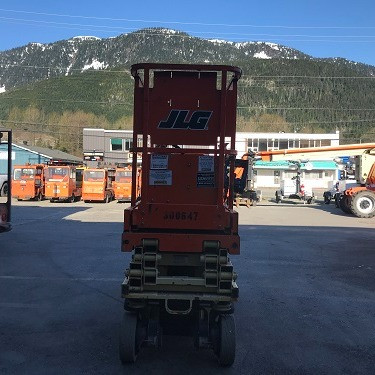
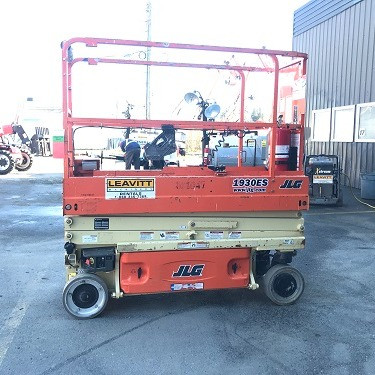
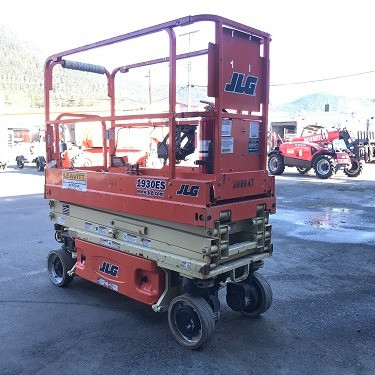
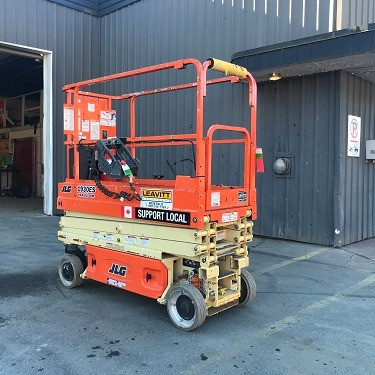
Snorkel: Snorkel Electric Boom Lift Pennsylvania - Types of Man Lifts Designed particularly to vertically raise employees to higher places, scissor lifts are common in the construction business to help move or lift employees form one location to another. Man lifts are power-driven and provide platforms or steps and special handholds to provide safe transport. The type of construction work being done would decide exactly which kind of man lift would be used in a project. Electrically Insulated Man Lifts Electrically insulated man lifts are a type of lift which is preferred for working near electrocution hazards, based on Man and Material Lift Engineering. The electrically insulated man lifts provide protection to workers against accidental electrocution. These type of equipment follow the American National Standards Institute A92.2 Category C, 46kV Rated. These electrically insulated man lifts offer fiberglass insulated booms, are operated on nonconductive hydraulic hoses that serve to reduce ground error and fiber optic control cables. Scissor Lifts Scissor lifts are a special type of aerial man lift which is meant to transport personnel vertically to hard-to-reach places. The scissor lift derived its name due to the scissor kind of design of the folding supports that can raise and lower the platform. To be able to hoist the lift, each and every one of the folding supports is opened in order to extend the platform to higher heights. Scissor lifts could be either manually or hydraulically lifted. Hydraulic systems allow the scissor lifts to descend with just a release of hydraulic pressure, rather than relying on power. Because the potential of mechanical malfunctions preventing the platform from rapidly descending to the ground is eliminated, hydraulic systems make safer scissor lifts at the end of the day. Capacity The man lift has a large range of weight capacities, with certain man lifts capable of holding a lot of people, while some models could only hold a single person. Platform lifts and scissor lifts are more beneficial for transporting numerous people, because boom lifts have less space located in their bucket.
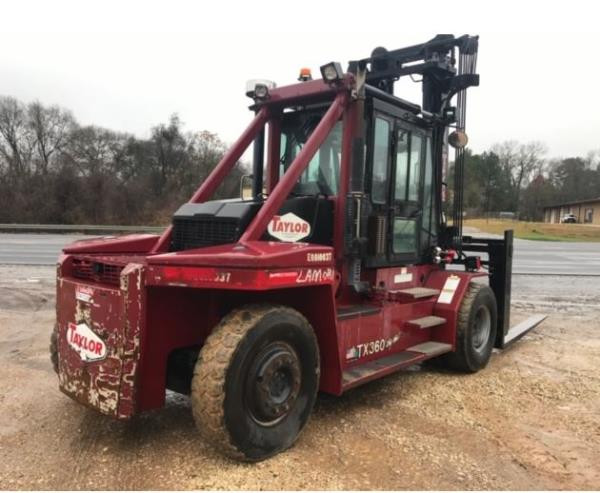
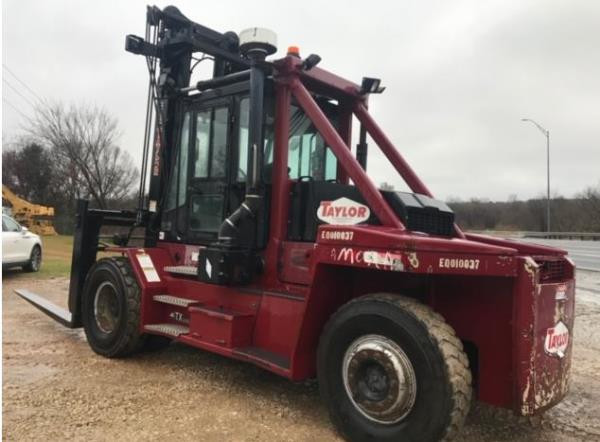
Taylor: Taylor Empty Container Handler Pennsylvania - The earth might be a completely different place compared to what it currently is had it not been for the remarkable invention of the fantastic forklift. The lift truck may not get all the recognition that it really deserves. When we think about the equipment that we depend on daily, the powerful lift truck is not one that automatically comes to mind; however, without these machines, hundreds of merchandise that we utilize on a daily basis will not be so readily or easily available. These kinds of industrial equipment make life as we know it possible in a variety of ways. From stacking lumber at saw mills to moving pallets full of goods, these kinds of vehicles keep the materials and products we rely on shipping all around the globe easily. It is not likely that you will visit a warehouse anywhere on the planet and not see a lift truck in vigorous operation. These machinery operate on battery power, diesel fuel, propane and gasoline. Without utilizing these kinds of industrial machines, it would be physically not possible to move the amount of products and materials that people are accustomed to utilizing on a daily basis. Just consider the progress which could have been made if the Ancient Egyptians or Babylonians had access to machinery like the lift trucks or its many derivations. It would have just taken one man to do the job of many. If these equipment have been around hundreds of years ago, our view of the planet would probably look quite different than it does today. When it comes to what precisely goes on behind the scenes, it is easy to be unaware of the details. Like for example, many people really do not think about how their peanut butter jars end up on the store shelves, as long as they are available when they would like to buy some. If all of a sudden, all of the container handler equipment within the world stopped functioning, numerous people would go hungry. A forklift makes the jobs of the people much simpler. They take on the work of numerous strong men and can complete the job without difficulty or any injuries. Lift trucks are machinery that make the world run a lot smoother. The earth in which we live might become a drastically different place if these machinery were no longer available to employees and companies. The evolution of lift trucks has changed the earth wherein we live. They are extremely strong, efficient and can do much.
Mitsubishi: Mitsubishi Warehouse Forklifts Pennsylvania - Consider the Fast Charge Option When it comes to recharging the battery of a forklift, there is an old rule of thumb which goes something like this: use the battery for a shift of around 8 hours, charge it for 8 hours and then allow it to rest and cool for another 8 hours. This formula has changed for numerous work operations which run more than one 8 hour shift. The fast charging choice has become an extremely popular alternative to conventional charging and since its development; numerous companies have opted to make the switch. What Are the Advantages of Fast Charging? Less Charging Time Where the standard charger and battery was concerned, re-energizing a battery from a 20% state of charge up to a full 100% charge used to take around 8 hours. Fast charging can now accomplish this same charging in around an hour to an hour and a half! Numerous businesses use scheduled lunch and break times to accomplish this important job. Easier Refills The fast charge batteries will usually require a single-point watering system. This system means that users do not require removing the battery from the forklift to be able to water it. Temperature-Sensitive Design There is a thermistor located near the center cell on each new fast charge battery which helps it to monitor temperature. The charge rate is reduced and can occasionally stop once the temperatures get to a specific level. This is important so that the battery does not overheat. Unfortunately, this method could result in an undercharged battery. There are some specific fast charge battery brands that use inter-cell connectors, extra thick posts and copper inserts so as to decrease heat generation and increase conductivity because of the higher current. These features help to enable the battery to accept a higher charge rate for a longer time period. These machines have seen their overall production increase significantly ever since the fast charge battery system was developed. Before, businesses used to require more than one machine when they were operating around the clock; nowadays they could save much money and utilize one forklift twice as much in a day with by using the fast charging batteries.
Raymond: Raymond Double Reach Forklifts Pennsylvania - Raymond delivers excellent material handling solutions for the food processing industry, which is one of the most busy and important businesses in our world's infrastructure. The food processing industry uses a wide array of material handling solutions in order to handle the diversity in the food supply chain. For instance, if you are shipping or receiving raw materials or raw ingredients or preparing to send a shipment out of your distribution center, then you need forklifts that are made to meet the productivity requirements and needs of a high velocity warehouse environment. In the food processing sector requires machines which could be exposed to harsh environments, resilient enough to endure caustics, brine and other fluids, while holding up to regular wash downs. The harshest settings demand extreme solutions. No other material handling business pays as close attention to the extreme situations and paces you put your lift trucks through more than Raymond. Corrosive fluids like acidic brines could take a real toll on your environment. Handling fish, meat and poultry for example will greatly reduce the overall life of your trucks. As well, frequent wash downs can also shorten and influence the truck life. An available alternative on a lot of Raymond models include the Extreme Environment Corrosion package, which help to extend the overall life of your lift truck. This corrosion package helps to save on maintenance expenses and lessen your total cost of ownership. Raymond's narrow aisle lift trucks and very narrow aisle lift trucks are the ideal complement to the very well controlled and exceptionally clean distribution and manufacturing environments required by the Pharmaceutical and Medical communities. These particular businesses must know they are utilizing effective and non-polluting equipment whenever possible and Raymond delivers every time.
Jungheinrich: Jungheinrich IC Forklift Pennsylvania - All You Have To Know About Forklift Parts Forklift trucks are utilized within various businesses to raise heavy loads of material and drive the loads from one place to another. Lift trucks are commonly utilized within warehouses, distribution and retail centers. On the whole, a lift truck is a truck that lifts cargo. The most common way to raise loads is on a pallet. To acquire a forklift truck, equipment could be hired from a forklift hire company, or it can be purchased brand new from a supplier. A regular lift truck can be bought and then extra parts could be bought to improve its functions. Used forklift parts are offered and would cost less than new parts. Forklift trucks are involved in heavy work that tends to wear parts. Some of the forklift parts will need replacement from time to time, such as the engine parts or wheels. The purchase of extra forklift parts could also improve the forklift's capability. Different attachments are available that will allow the truck to handle various types of loads. The easiest way to locate forklift parts is from a lift truck parts supplier, either in person or online. Buying online from a trustworthy forklift parts business is really simple and fast because lots of suppliers today provide their catalogue on their internet site. Customers can look through the catalogue or enter the part name into a search box. Supplier websites normally give a contact number so clients can call to speak with a sales employee if they have any questions. There is a high initial expense when purchasing lift trucks and its parts, which can be difficult for a new business to obtain. Many companies opt to lease the lift truck on a monthly or yearly basis. This option makes the cost more reasonable. Another option is to search for second-hand components and a second-hand forklift truck, that could also be found on-line.
Toyota: Toyota Double Reach Forklifts Pennsylvania - You will discover many options and attachments available for lift trucks. While the majority of attachments are manufactured to be used on typical lift trucks, you'll find some made to be utilized on reach trucks and VNA. It is vital to note that OSHA requires approval for any attachment which should be approved for use by the specific lift truck manufacturer. The sideshift attachment is considered to be standard lift truck device. The sideshift device allows the fork carriage to slide left and right as well as allow for more accurate load placement. The sideshift allows the operator to be more versatile with the machine. Fork positioners are an attachment option which enables the operator to adjust the distance between the forks from the cab of the truck. This specific attachment is mostly used in high volume operations where there is a huge variety of pallet and crate sizes handled. The fork pivot enables the forks and carriage to rotate or pivot. Used for dumping and transporting hoppers which is specially designed. These attachments are really useful for various industrial applications. The slip sheet attachment is utilized to slip sheets of plastic, or paperboard or a sheet of cardboard which is used rather than pallets. The slip sheet attachments use a push and pull mechanism which clamps onto the slip sheet and pulls the load onto a thin platform. After that, the load is pushed off the platform when the truck reaches the destination. Drum handling attachments are available in many different designs. They are various models attached to handle 55 gallon drums. There are several smaller versions of a paper roll clamps that go around the roll and also are capable of a full 360 degree rotation. There are other drum attachments that are able to pick up various drums all simultaneously. Another option is tilt control, which allows the operator to preset the fork tilt angles. For extensions slide over the forks to help pick up and move longer loads. The Carton clamp operates like a paper roll clamp except rather than being round, the clamping surface is flat.
Komatsu: Komatsu IC Forklift Pennsylvania - Forklift Basics A forklift is a versatile machinery. It is a small vehicle that has attachments on the front which allow it to move and lift various loads. Forklifts are common features in warehouses and factories. A forklift operator must acquire special training, specially since these equipment work on rear-wheel drive and this can be difficult to get used to until one is familiar with it. Since the forklift carries its load at the front, the center of gravity is continually shifting and this results in the equipment being frequently unstable. Parts The lift truck operator would sit inside the area known as the "cat." Its an area protected by metal bars that stretch overhead like a roof. On the front of the equipment, the mast is located. The mast is the mechanism that raises and lowers the load using hydraulic cylinders. Forklift Parts It is always a great idea to check the internet and the local area phone book when looking for remanufactured forklift parts and aftermarket forklift components information. A lot of places offer various forklift components, forklift accessories and support products. Structural Parts The overhead guard is part of the top portion of the forklift, while the foot guard separates the load from the cabin. A counterweight is located at the rear of the forklift and is installed there in an effort to keep the machinery from falling over. The blades and Apron The load apron is usually responsible for keeping the load positioned correctly on the forks, or metal arms, cradle the load. The blades can be tilted in order to balance the load. This is accomplished with the tilting ram and the hydraulic hoist arm which powers the upward movement of the fork. The Lift Structure The load apron guard extends over the apron. It functions to keep the load balanced as the tines carry it along the track of the arms of the upright. Mechanics The forklift's internal engine allows power to be sent to the wheels of the machinery. This is what makes the forklift move. The wheels have brakes installed in order to enable the driver the chance to slow down or stop the machinery as required. Controls Lifting loads is operated utilizing hoist controls that are located inside the cat. The lift truck is driven by using the steering wheel to turn, similar to a car or truck. Load Rating Plate The specific safety rating plate is bolted inside of the cabin. This load rating plate details the weight restrictions for each and every particular forklift.
Yale: Yale Counterbalance Forklifts Pennsylvania - Counterbalanced Trucks: The sit down or rider truck also goes by the name counterbalanced truck. It is offered in both electric and ICE units. This truck is mostly used in warehouses and is available with lifting capacities in the 2500 to 12,000 lb. range. Counterbalanced trucks can lift loads to heights of over 20 feet, depending on the weight and model of truck. One of the biggest volume producers of zero emissions electric forklifts is Yale within the North American market. Yale is amongst the very first adopters of energy efficient AC motor and control technology. The company's continued pursuit of improved energy efficiency is affirmed by competitive testing. This testing proves that the company's 5000 pound electric rider product provides the best energy used per load moved or overall energy efficiency of any lift truck in its class within North America. The spark-ignited units produced by Yale already meet or surpass the industry standard requirements. Yale trucks have been rated amongst the lowest in exhaust emissions by CEPA and EPA testing reviews. Their diesels are becoming cleaner all the time because of ongoing development with diesel engine suppliers so as to meet Tier III standards. These machines also proactively meet upcoming Tier IV standards. Yale has also designed their Internal Combustion products for extended service intervals in order to reduce changes in oil and lessening consumption of this nonrenewable energy source for their customers. To greatly lessen tire and brake wear on all Yale Internal Combustion Engine forklifts, the company has produced and developed an electronically controlled and innovative transmission. When it comes to their electric trucks, Yale has introduced a system that recaptures energy into the truck during the lowering of loads and during braking. This energy is then reused, lessening the truck's overall energy consumption. Yale takes pride in reducing use of non-productive energy throughout the vehicle by means of hydraulic system efficiency, weight reduction and drive train components, patent pending.